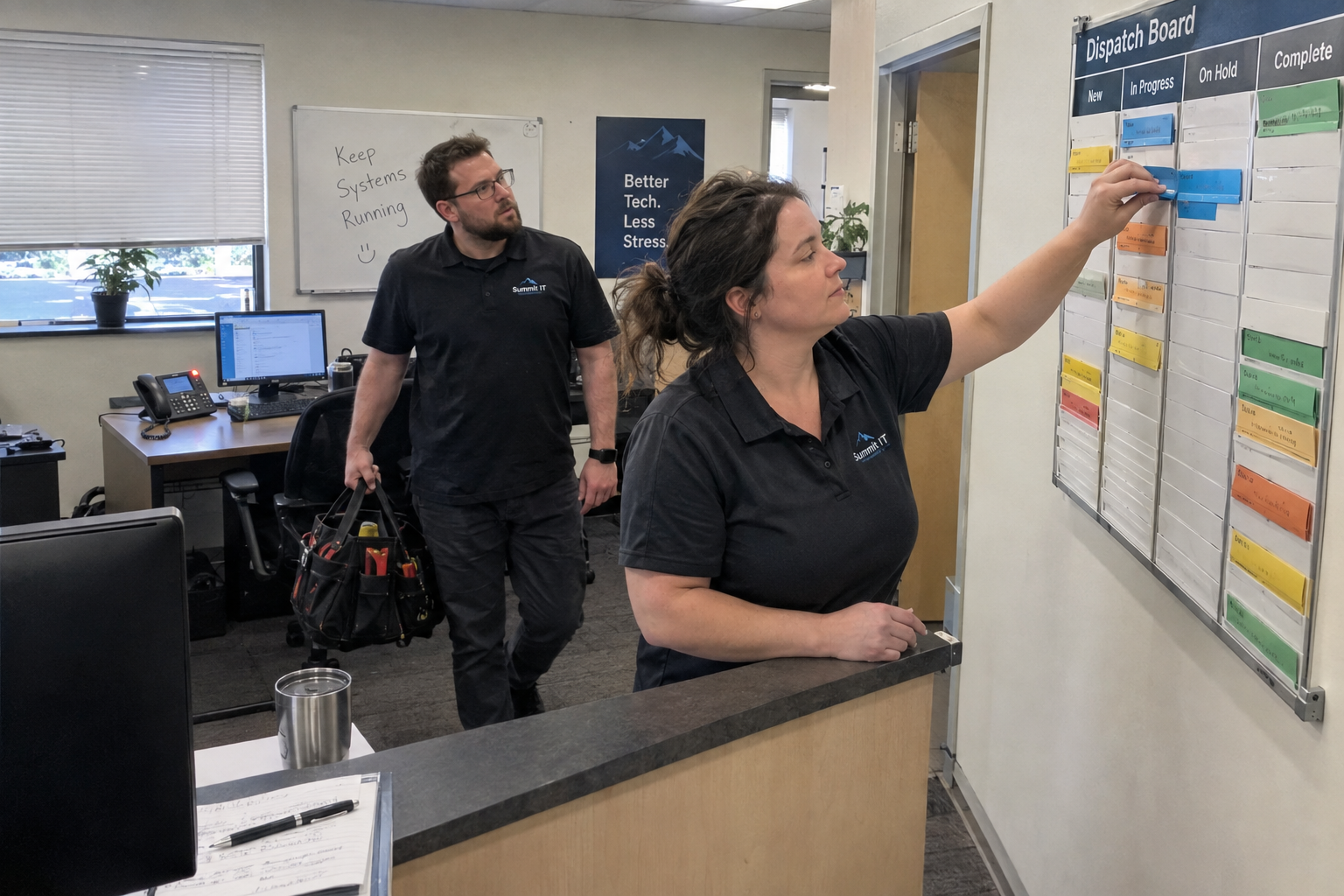
It's 4pm. A ticket has been sitting in your board for two days, nobody has touched it, and the client just emailed asking for a status. Everyone thought someone else was watching. That's the problem with dispatch: when it's nobody's job, it's nobody's job.
You don't need to hire a dispatcher to fix it. You need to name one person per shift who owns the board, even while they're doing technical work. That's it. That's the whole mechanism.
Who Actually Owns the Board?
Picture a 12-person MSP with no dispatcher. Split coverage into three shifts: morning, midday, afternoon. For each shift, name one person the dispatcher of the shift. They still take tickets. They still do the work. But for their shift, the board is theirs.
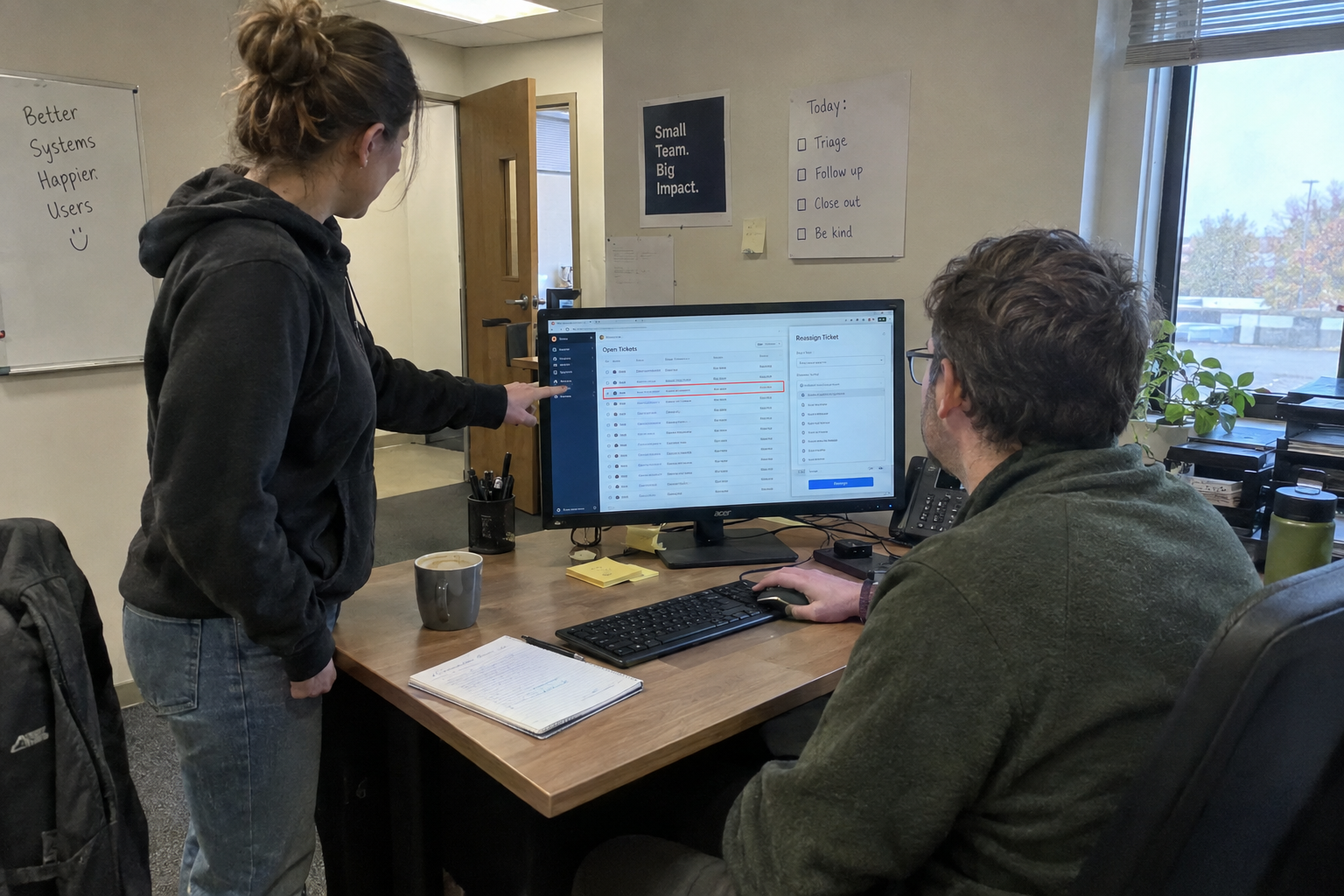
The named owner does a 10-minute sweep at the start of their shift. They look for tickets that have gone quiet, reassign what's stuck, and escalate what's blocking a client. Ten minutes, twice a day plus once at handoff, and the board stops being everyone's problem and starts being one person's job, shift by shift.
The first question you'll ask is: who does it when that person is swamped? We'll get to that. First, what the sweep actually is.
What Does a Sweep Actually Look Like?
A sweep is a 10 to 20 minute review of the board for tickets that haven't had activity in a set amount of time. The defaults used by the board-health-auditor agent documentation set stuck-ticket detection at 3 to 5 business days without activity for assigned tickets, and 5 business days for Waiting-on-Client status. That's your starting point. Adjust it to your pace. If your clients expect answers in a day, tighten it. If you're a slower-moving shop, loosen it. The point is to have a number, not to run on vibes.
Here's the sweep checklist for the morning owner at our 12-person example:
- Open the board, filter for assigned tickets with no activity in 3 business days.
- For each one: is there a blocker? Reassign to someone who can move it, or add a note so the next shift knows what's going on.
- Filter for Waiting-on-Client tickets older than 5 business days. Send the chaser to the client, or close it if the answer's not coming.
- Escalate anything that's blocking a client or a go-live to the service manager. That's not your call to sit on.
- Log what you did in the team channel so the next owner picks up where you left off.
That's the whole sweep. The sticky part is making sure it happens when everyone's busy, which is the rotation's job.
How Do You Keep the Rotation Honest?
A rotation only works if someone covers when the primary is out. So each shift owner names a backup, and the backup's job is the same as the primary's if the primary can't do it. No exceptions.
Put the rotation on a shared calendar with the owner and backup listed for each shift. If the midday owner is sick, the backup does the sweep at midday and flags it in the team chat. Everyone knows who's watching, and nobody gets to assume.
Review board health at the weekly team meeting. Ten minutes. How many tickets hit the stuck threshold this week? Which shifts missed their sweep? That's where the rotation stays honest, not in a policy document.
The harder question is whether any of this is working. That's a two-number check.
How Do You Know It's Working?
Track two numbers each week: the count of tickets that hit your stuck threshold, and the average time from ticket creation to first response. Review both at the weekly meeting. That's it.
Say the 12-person MSP starts the rotation and sees the count of tickets stuck over 3 days drop. That's the signal you're watching for. If the sweeps start eating more than 30 minutes per shift, treat that as the warning that the shared-duty model is straining. Don't keep polishing it. Fall back.
When Does This Break Down?
This model fails in three ways, and you need to see them coming:
- Fewer than three people who can rotate shifts. With two, one absence leaves the board unwatched. Go to a daily triage meeting instead.
- Volume spikes that make every sweep take longer than 30 minutes. That means dispatch is now a full-time job wearing a part-time hat, and the board will suffer for it.
- Wide coverage hours, like 24/7, with a small team. The same two or three people rotating across all hours will burn out in weeks.
A 5-person MSP with two people out on leave and a client go-live is a week where every shift owner is firefighting. The board goes worse. That's when you stop pretending the rotation can absorb it and call a daily triage meeting instead, 15 minutes at 9am, everyone looks at the board together, and the day starts with a shared picture.
And if stuck tickets keep piling up despite the rotation, that's the same signal. The model is failingasi. Use the fallback meeting.
The rotation is a tool, not a religion. When it stops working, use the fallback.
Your First Move on Monday
Monday morning, schedule a 30-minute team huddle. Assign the first week's shift owners and backups. Agree on your stuck-ticket thresholds, starting at 3 days for assigned and 5 for Waiting-on-Client, and adjust to your pace. Put the rotation on the shared calendar with both names for each shift.
Then each owner does a 10-minute sweep at the start of their shift. Flag any sweep that takes more than 30 minutes in the team chat, because that's the early warning that the system is buckling.
Expect each shift owner to lose roughly 30 to 60 minutes of billable time per day to the sweeps. That's the cost of not hiring a dispatcher. It's a fair trade if the board stops being a client-facing embarrassment. And you'll know by Friday whether it's working.

mspoutpost.com/articles/run-dispatch-without-a-dispatcher
Written by Megan Friesen
MSP Outpost publishes information, not legal, financial, insurance, tax or compliance advice, and reading it creates no professional relationship. For decisions about your business, talk to a qualified professional.